
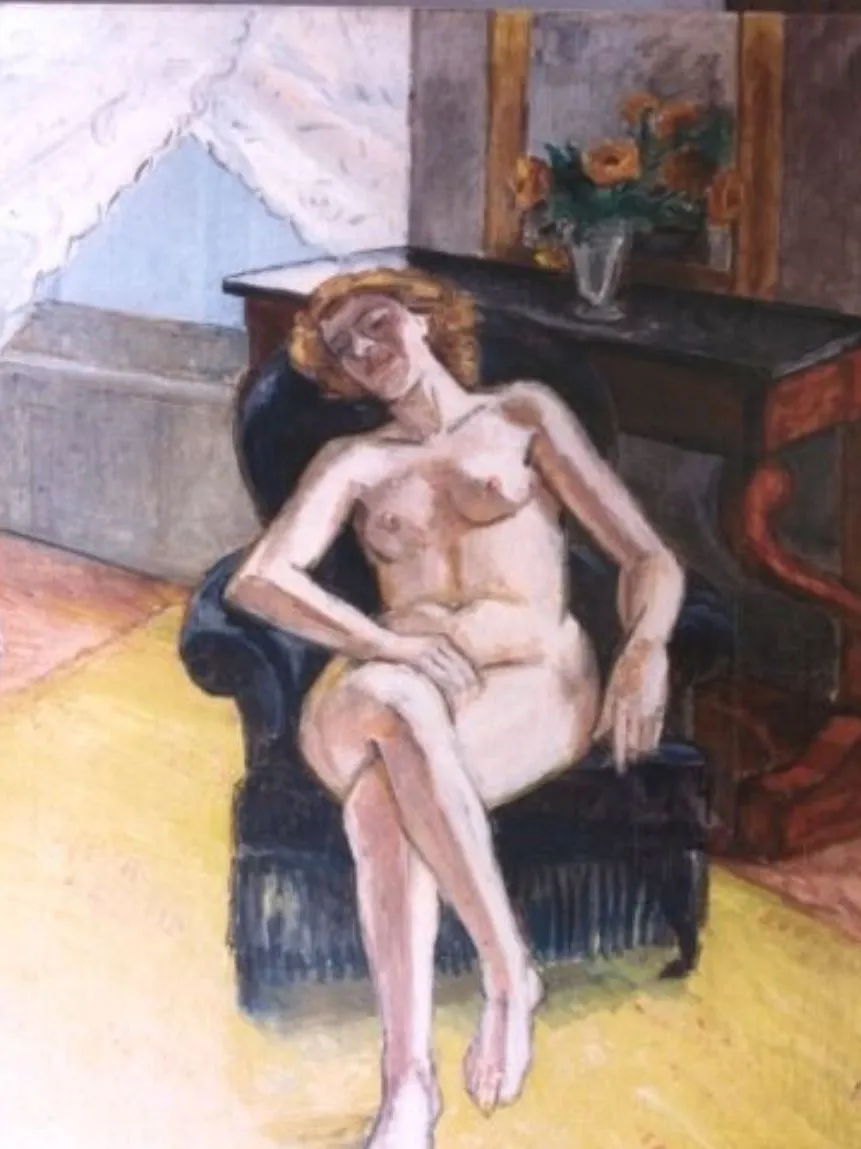
Nude indoors
The photographs of the lot are for information and guidance only and cannot provide an extremely detailed view of the object from every angle. We recommend a careful physical inspection of the lot before bidding.
Nude indoors
Description
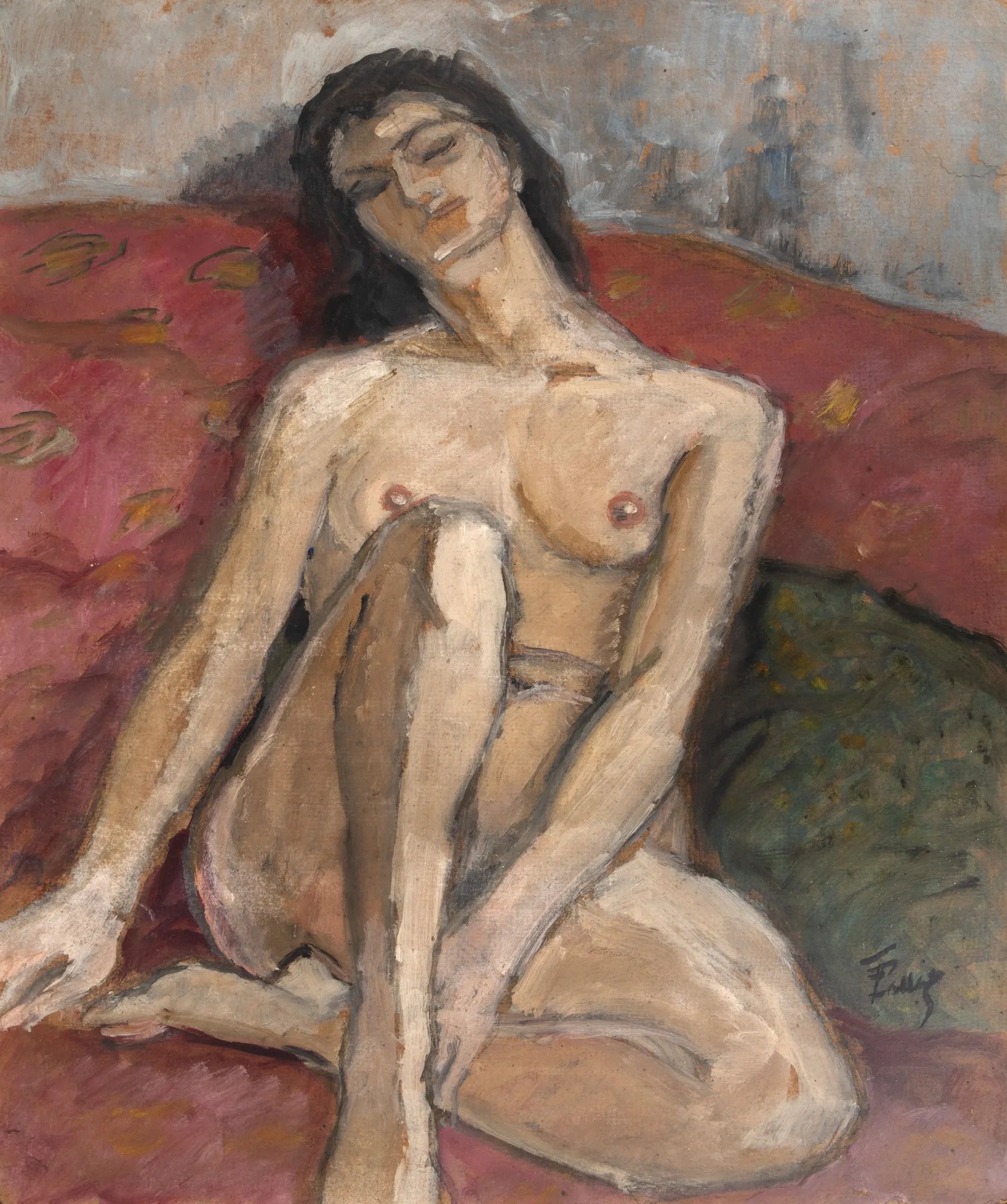
The female nude as a model appears in Theodor Pallady's creation from the early decades of the 20th century, in the context of his artistic training and his Parisian period. After his debut in Paris, around 1900, the female character becomes a constant presence in his painting and graphic work, being represented in portraits and interior scenes, as well as numerous studies and compositions with nudes. This theme does not belong to a single stage of his creation, but returns over several decades, from his works of the 1910s to those made in the 1930s-1940s. The female body becomes an element of the pictorial construction, related to interior space, furniture, decorative objects, flowers, drapes, and color spots. Most often, the model is frequently seated on an armchair, sofa, bed, or chaise-longue, integrated into a carefully organized composition. Pallady is particularly interested in the relationship between the figure and the space in which it is placed. The body is not isolated from the decor, but contributes to the balance of the entire composition. The position of the model, the direction of the limbs, the lines of furniture, and the arrangement of objects all contribute to the organization of the pictorial surface. The nude offers the artist the possibility to simultaneously study the shape of the body, the line, rhythm, color, and the relationships between planes. An important characteristic is also the restrained nature of these representations. The model poses and is aware of the presence of the painter, but is not presented in a theatrical attitude or a gesture intended for the viewer. Many of the figures seem absorbed into a state of rest or contemplation, the atmosphere is one of intimacy and suspension, and elements of decor contribute to this impression. In the present work, the female figure plays an essential role in organizing the composition, becoming the center of an interior scene characterized by tranquility, balance, and intimacy. The body is not presented as an object of desire, but as an expression of contemplative human presence. Femininity becomes, in this context, a form of intimacy and sensitivity, filtered through the delicacy and elegance specific to Pallady's plastic universe. Devoid of theatricality, the scene suggests a suspended time, of reverie, and inwardness, in which the surrounding space participates in building the emotional state. Pallady's preference for certain models is also reflected in the repetitive character of female representations in his work. In some compositions, the static nature, flowers, drapes or furniture objects play an almost equally important role in constructing the atmosphere as the female figure. The representation of the nude and the female figure can also be traced in other important compositions of the painter, such as "Nude with Guitar", "Nude with Letter", "Cleopatra" and "Nude in Green Armchair". Through these works, Pallady transforms the nude from an exercise in representing the body into a means of exploring sensitivity and inner life. At the center of the image is not so much the body itself, but the state it conveys: tranquility, reverie, discretion, and a form of restrained emotion.
Biography
ȘORBAN, Raoul, "Theodor Pallady", Meridiane Publishing House, Bucharest, 1975. CEBUC, Alexandru, "Pallady", Official Monitor R. A. Publishing House, Bucharest, 2008.
Sizing
Width 50.5, Height 66.5
Signature
signed lower right, in black, "T. Pallady"
Dating
anii '30
Medium
oil and charcoal on cardboard
Location
Artmark românia