

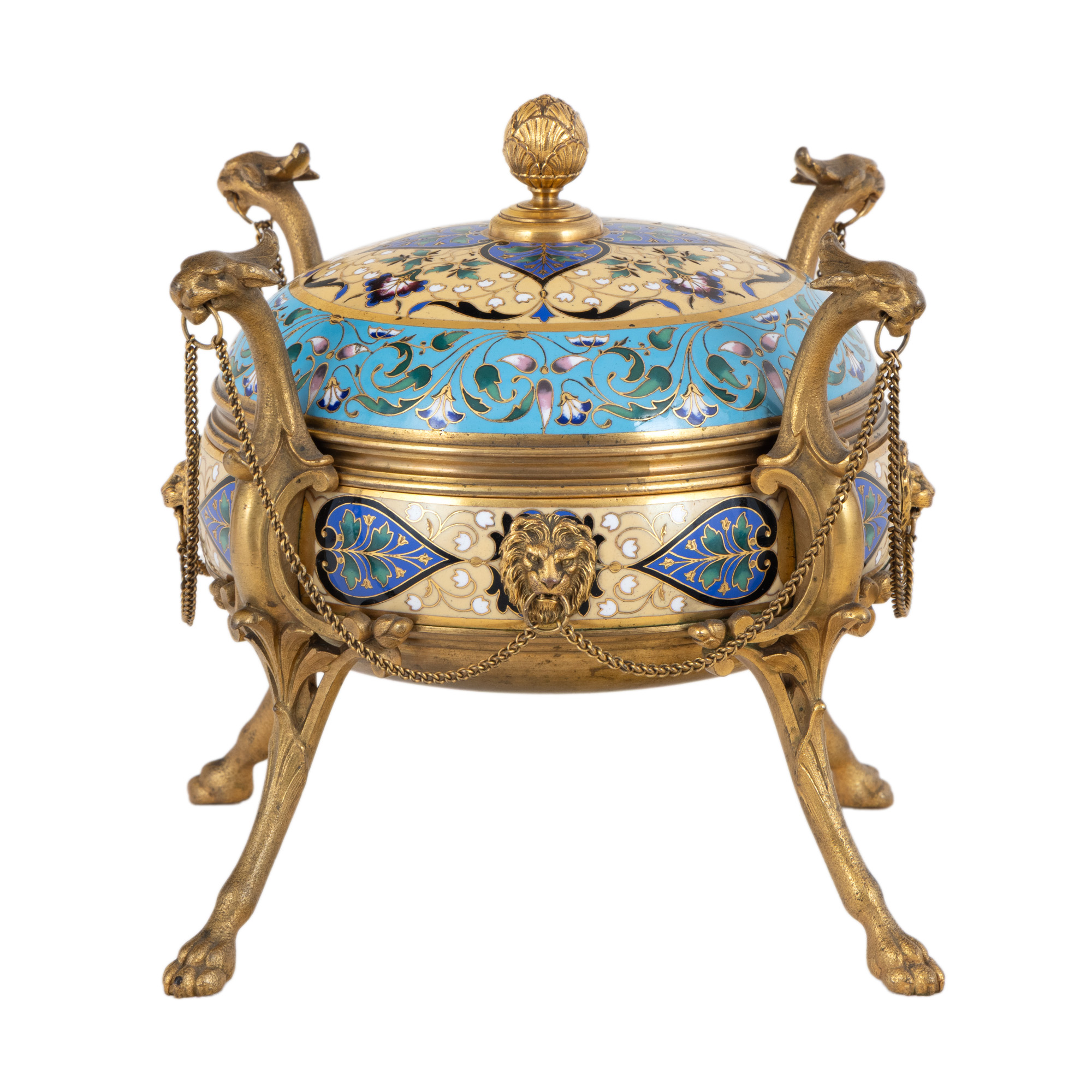
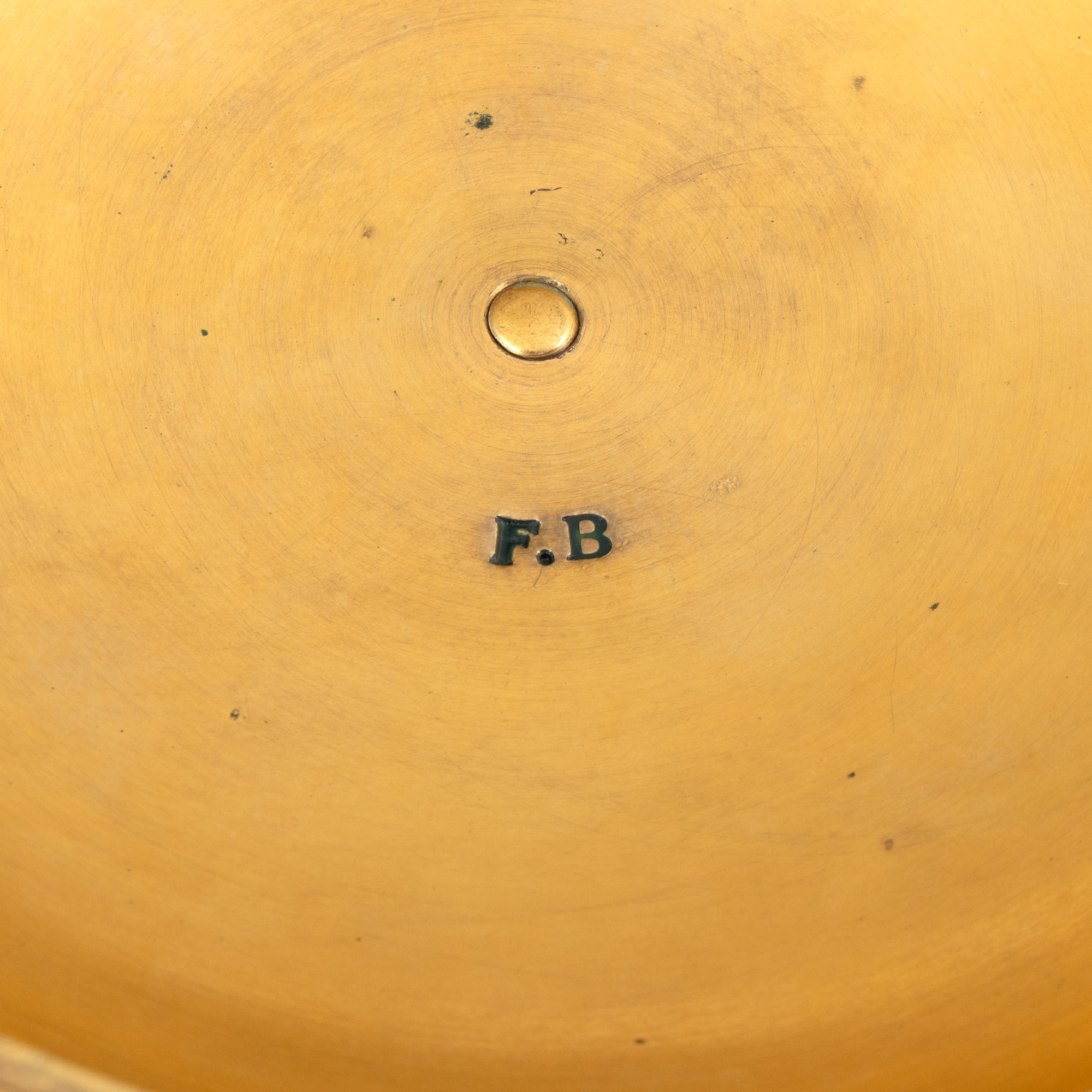
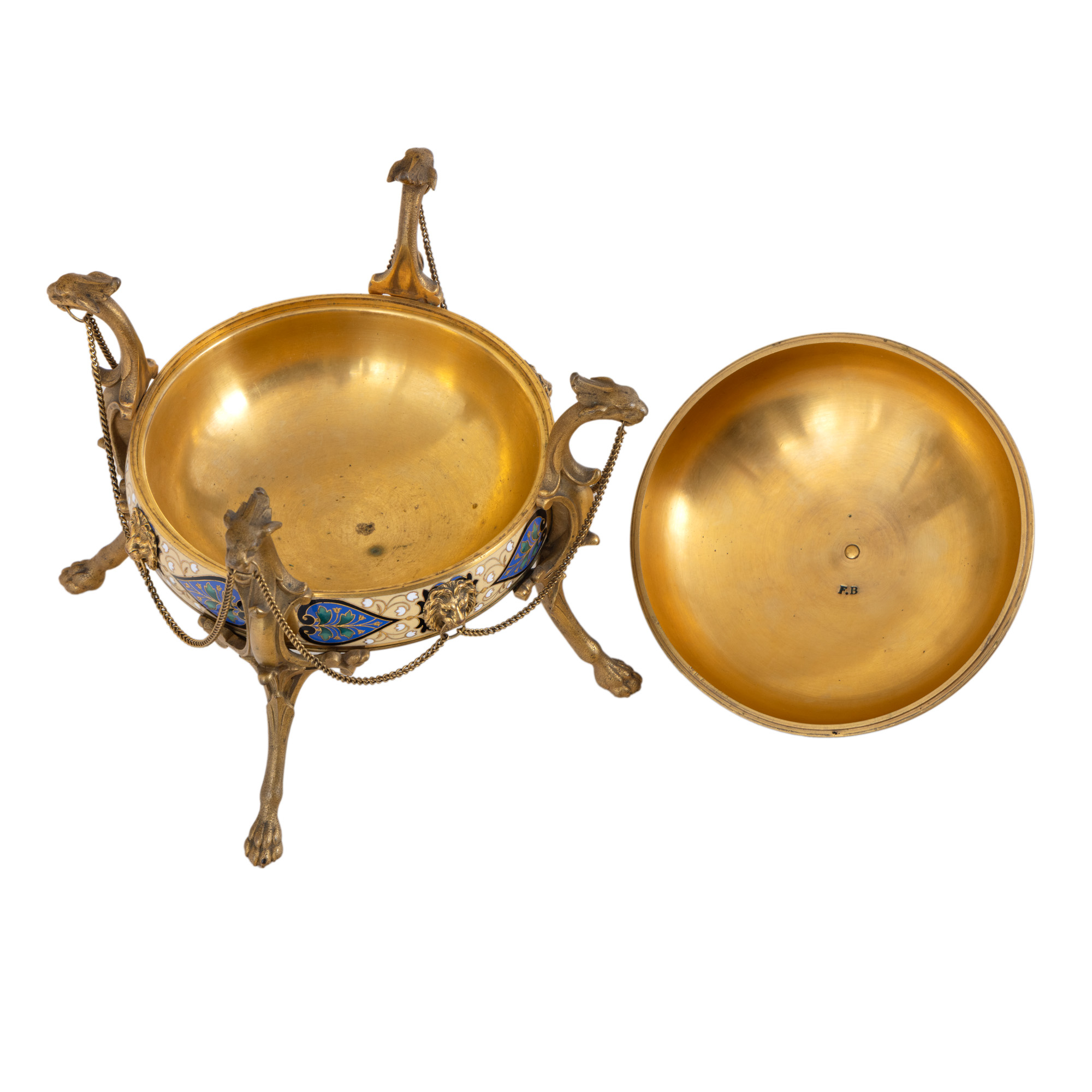
232. Gilt bronze bonbonnière, decorated with champlevé enamel, signed F. Barbedienne, circa 1875
The photos of the lot are informative and indicative, and cannot provide a highly detailed view of the object from all angles. We recommend a careful physical inspection of the lot before bidding.
232. Gilt bronze bonbonnière, decorated with champlevé enamel, signed F. Barbedienne, circa 1875
Not sold
Selling price
EUR 2.400
gilded bronze, polychrome enamel, h=16 cm, d=19 cm
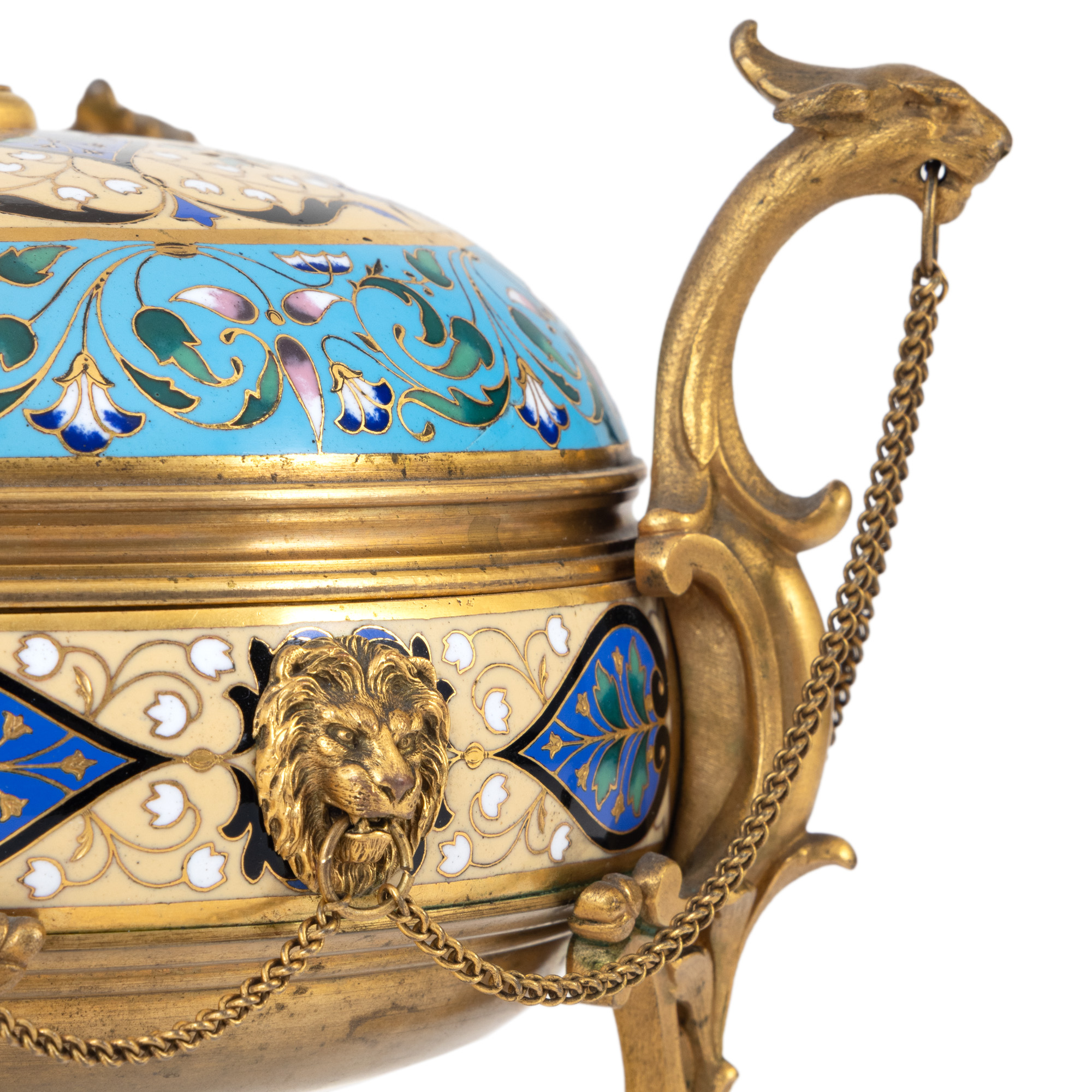
The bulging body, of circular shape, is supported by four zoomorphic legs, ending in paws, continued in mounts with fantastic heads of chimeras/dragons. These are united by suspended decorative chains, arranged around the body of the vessel.
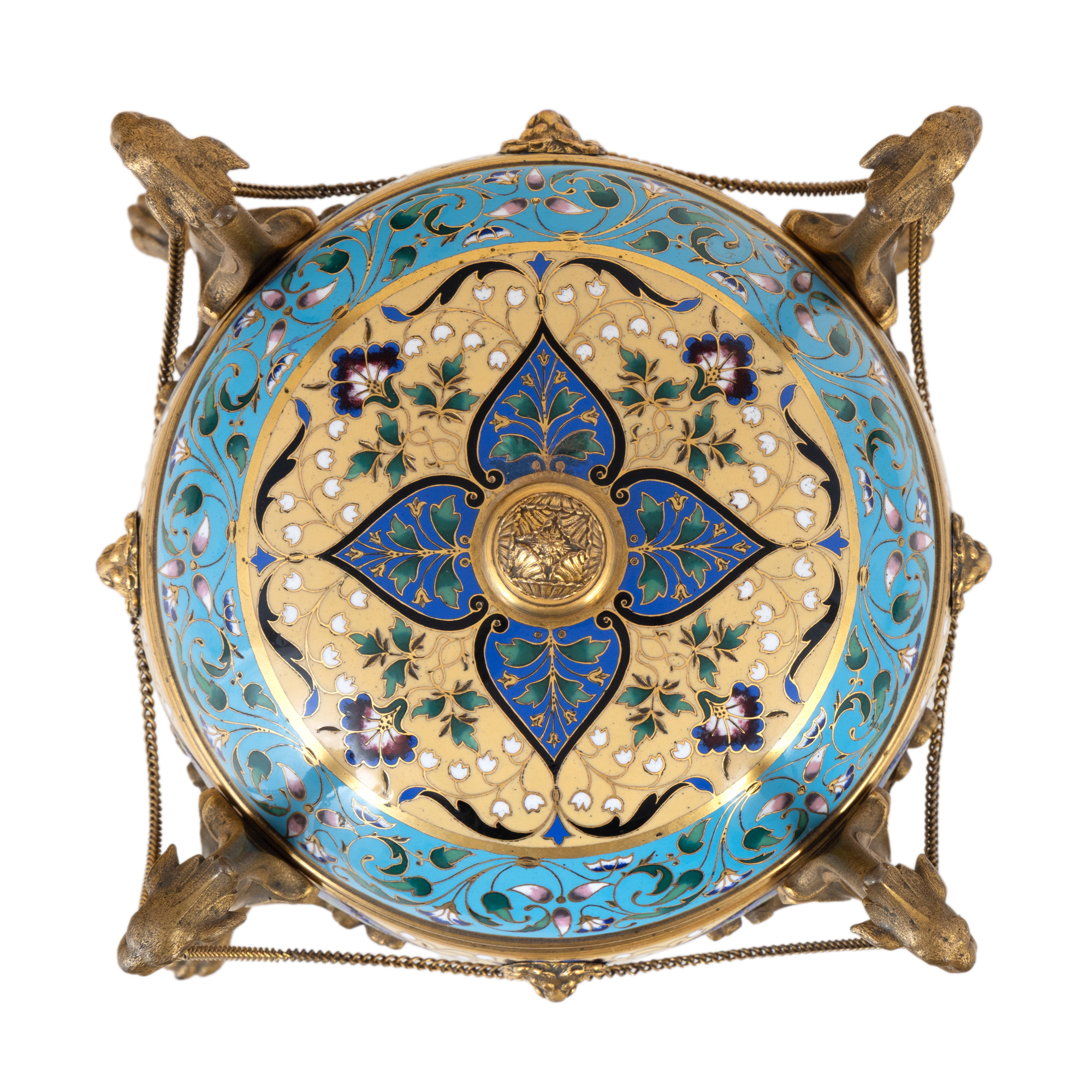
The surface of the body is structured in ornamental registers with vegetal rinceaux, palmettes, and stylized floral motifs, made in polychrome enamels in shades of blue, turquoise, green, white, and red, on a gold background. The decoration is completed by leonine masks in relief, applied on the median register.
The bulging lid continues the enameled decoration, with ample vegetal tendrils, and Byzantine-inspired motifs, being surmounted by an ornamental gilt-bronze knob, in the shape of an artichoke/vegetal cone.
Through the combination of chiseled and gilded bronze, polychrome enamels, and the neo-Byzantine repertoire, the piece is part of the aesthetics of the luxury objects produced in France during the Second Empire and in the first decades of the Third Republic, being very close to the models made by Maison Ferdinand Barbedienne, after designs attributed to the sculptor-ornamentist Louis-Constant Sévin (1821–1888).
A comparable model, attributed to Sévin and signed F. Barbedienne, is dated around 1880 and described as being made of gilded bronze and polychrome enamel. Variants of the same model are documented from the 1860-1870s, including a piece acquired in 1867 by the Austrian Museum of Applied Arts in Vienna and a cup presented by Barbedienne at the Vienna Universal Exhibition in 1873.
For clarifications regarding the bidding procedure, hammer price costs, guarantee, payment, and collection terms for the winning lot, we recommend carefully reading/re-reading the Bidding Regulations.
For additional information regarding the lot and the auction, please contact the Art Consultants Department.
SESSION
Similar lots
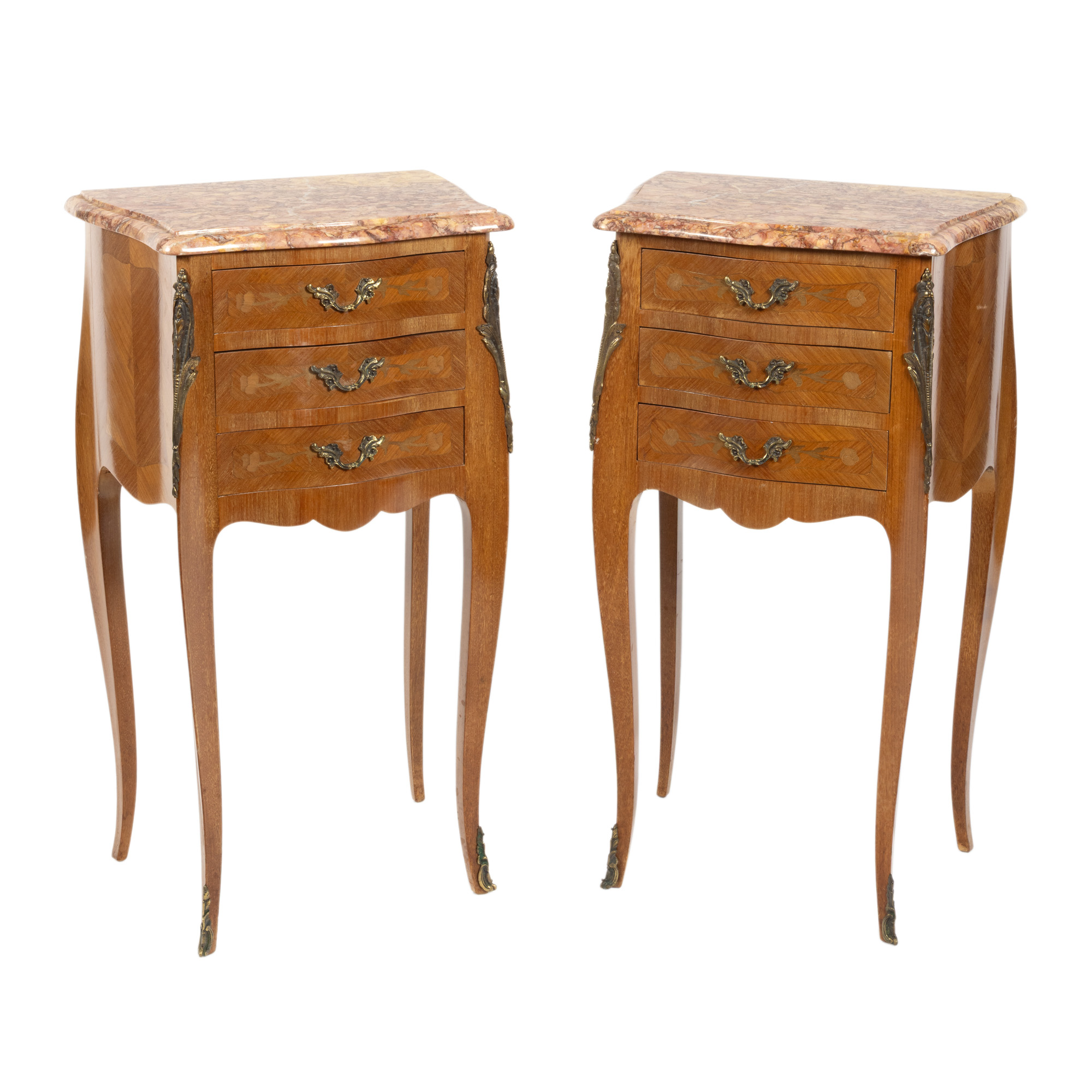
76. Pair of Louis XV style bedside tables with marble top, early 20th century
Estimate:
EUR 300 - 400
Sold
EUR 350