
The photos of the lot are informative and indicative, and cannot provide a highly detailed view of the object from all angles. We recommend a careful physical inspection of the lot before bidding.
JIANU, I., "Gheorghe Petrașcu", Royal Foundation "King Mihai I", Bucharest, 1945.
OPRESCU, George, "Gheorghe Petrașcu", Meridiane Publishing House, Bucharest, 1963.
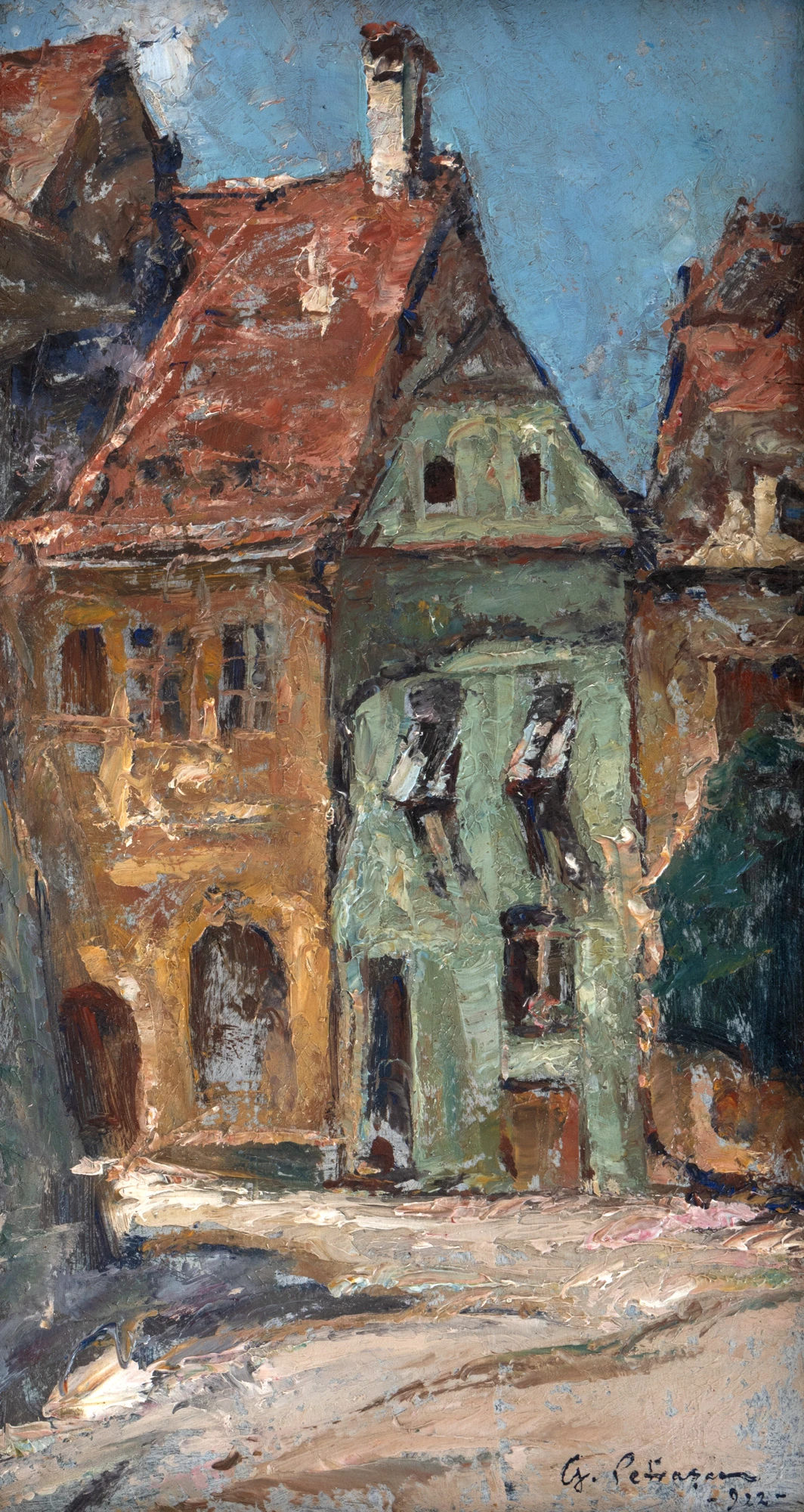
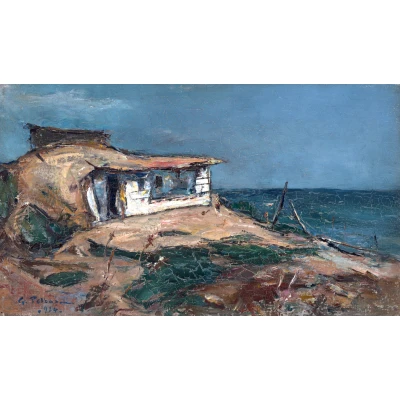
oil on cardboard, 29 x 16 cm, signed and dated bottom right, in black, "G. Petrașcu, (1)922"
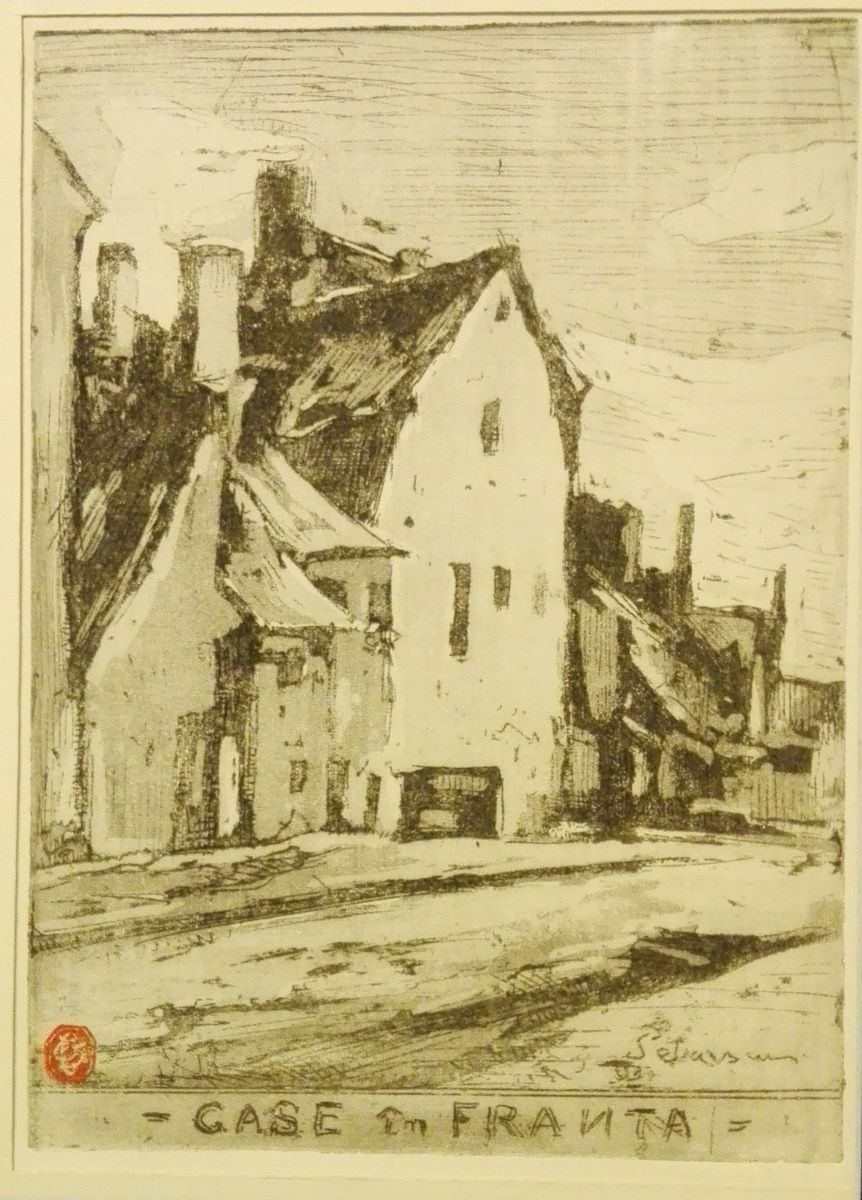
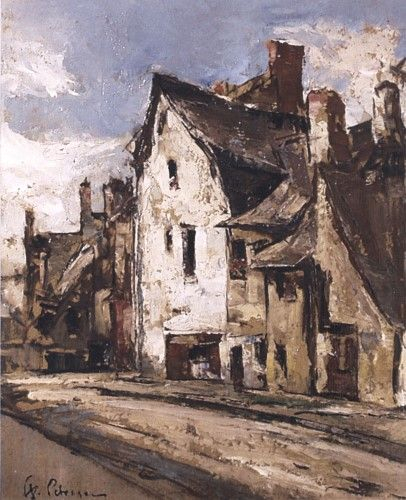
Between 1900-1930, Gheorghe Petraşcu embarked on several journeys to the north of France, where he created numerous scenes inspired by places such as Vitré, Morlaix, Saint-Malo, and Ploumanac’h. His first visits to Brittany took place at the beginning of the century, in a context where the artist followed an almost initiatory process, following the route previously taken by Nicolae Grigorescu in the northwest of France. Over the years, Petraşcu returned to Brittany, especially to Vitré, being attracted by the specifics of the medieval towns and the possibilities they offered for exploring the urban space. Narrow streets, the facades of old buildings, the succession of architectural volumes and the perspectives they created became recurring elements in his work, with architecture surpassing the role of a simple background and becoming a true pictorial subject.
The year 1921 represents one of the most prolific periods of Petraşcu's creativity, being the year in which the artist created a significant number of works inspired by Vitré. Having returned here after the end of World War I, Petraşcu continued his journey through Brittany, also stopping in Saint-Malo, Saint-Énogat, and Morlaix. In this sense, he can be considered, indirectly, a successor of Nicolae Grigorescu, both artists showing a particular interest in the landscape and specifics of Brittany and contributing to the transposition of these landscapes into Romanian painting. If Grigorescu had found above all the expressiveness of the landscape and local life in Brittany, Petraşcu developed this experience in a personal direction, focusing more and more on architecture and the relationship between construction, street, and the urban space. Petraşcu's interest in the architecture of Vitré can be explained by its peculiar character, dominated by medieval constructions, houses with a traditional structure, narrow facades and streets that create fragmented and dynamic perspectives.
Between 1921-1936 he embarked on journeys not only in France, but also in Italy and Spain. However, the unique architecture of the houses in the small settlement on the western tip of Brittany remained a favored and recurring motif for the artist, such as: "Houses in Vitre", "Houses in Vitre", "Street in Vitre" or "Houses" that can be found at the National Museum of Art of Romania.
For clarifications regarding the bidding procedure, hammer price costs, guarantee, payment, and collection terms for the winning lot, we recommend carefully reading/re-reading the Bidding Regulations.
For additional information regarding the lot and the auction, please contact the Art Consultants Department.
By choosing "Accept all cookies" you agree to the use of cookies to help us provide you with a better user experience and to analyse website usage. By clicking "Adjust your preferences" you can choose which cookies to allow. Only the essential cookies are necessary for the proper functioning of our website and cannot be refused
Cookie settings
Our website stores four types of cookies. At any time you can choose which cookies you accept and which you refuse. You can read more about what cookies are and what types of cookies we store in our Confidentiality Policy.
are necessary for technical reasons. Without them, this website may not function properly.
are necessary for specific functionality on the website. Without them, some features may be disabled.
allow us to analyse website use and to improve the visitor's experience.
allow us to personalise your experience and to send you relevant content and offers, on this website and other websites.