The photos of the lot are informative and indicative, and cannot provide a highly detailed view of the object from all angles. We recommend a careful physical inspection of the lot before bidding.
ȘORBAN, Raoul, "Theodor Pallady", Meridiane Publishing House, Bucharest, 1975.
CEBUC, Alexandru, "Pallady", Official Monitor Publishing House R. A., Bucharest, 2008.
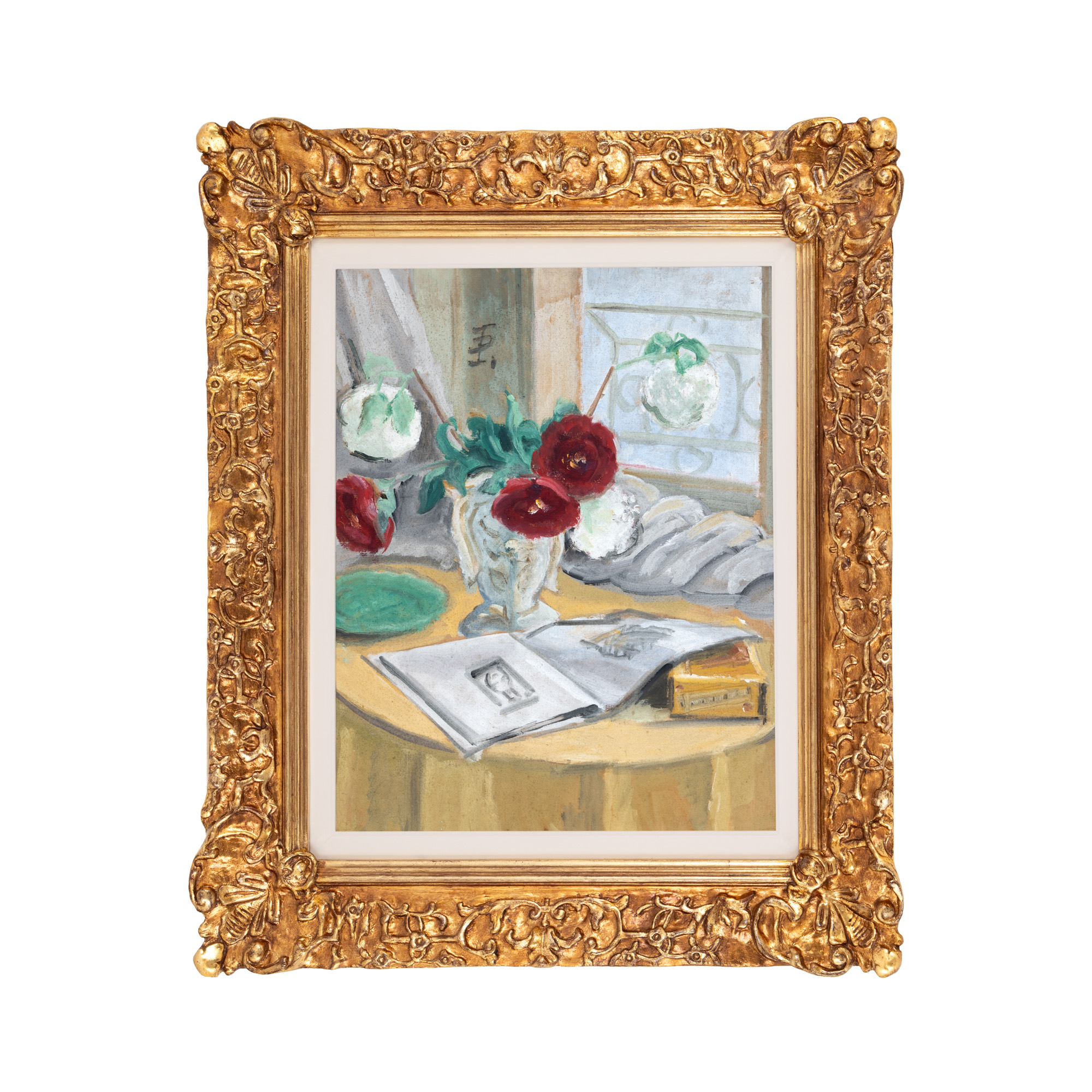
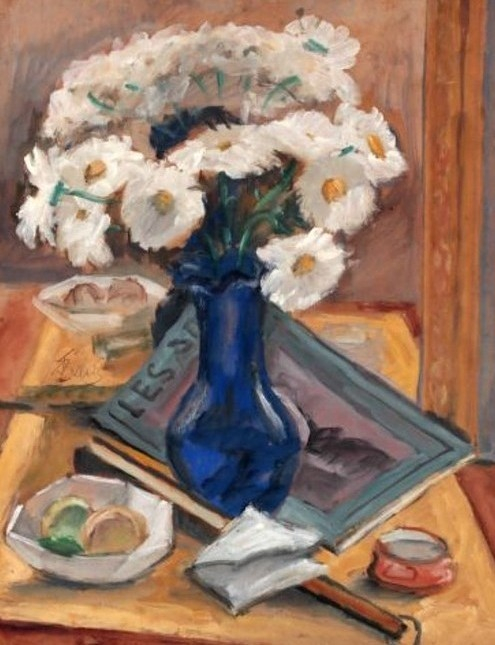
oil on cardboard, 59 x 49 cm, signed top left, in black, "TP"
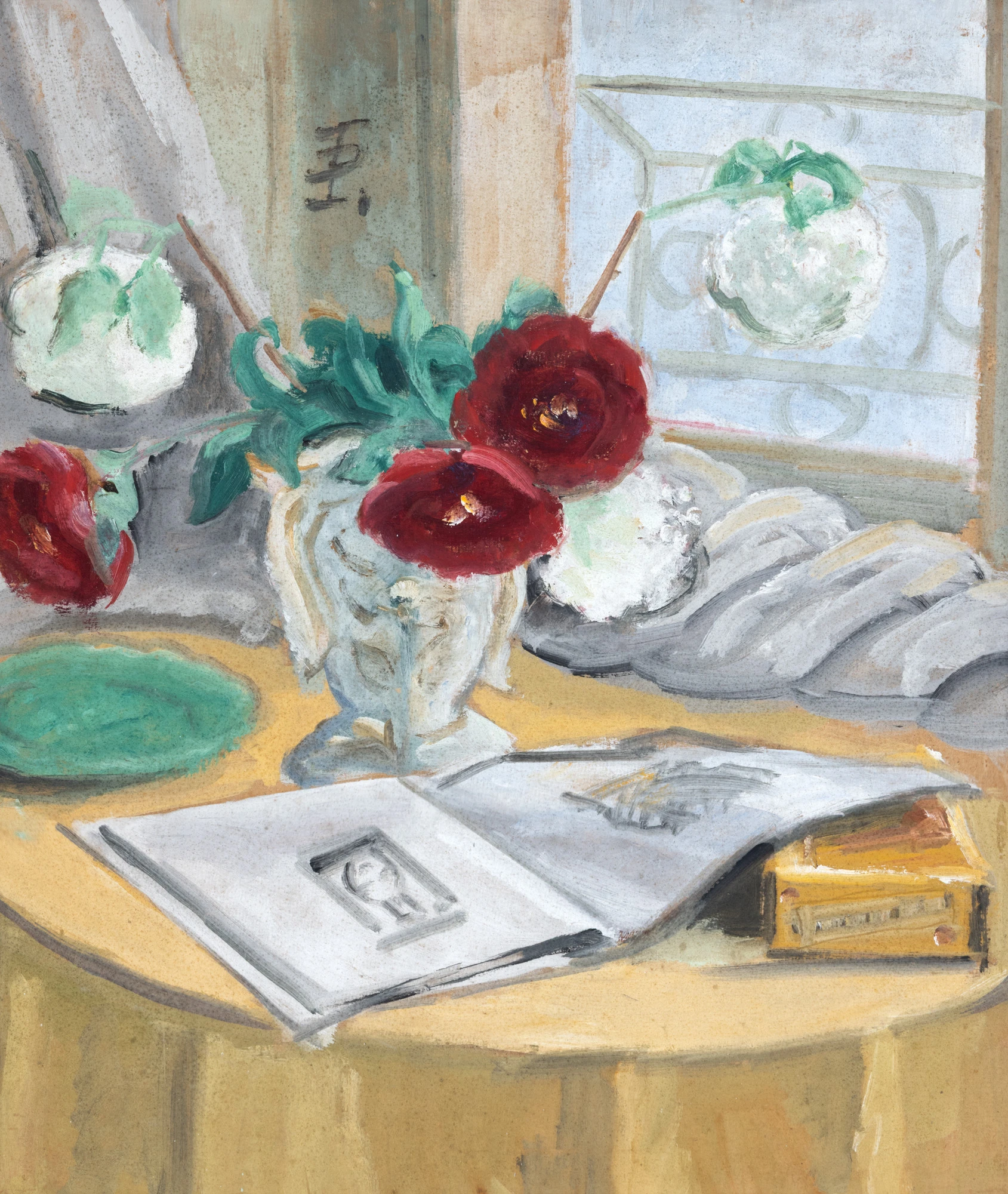
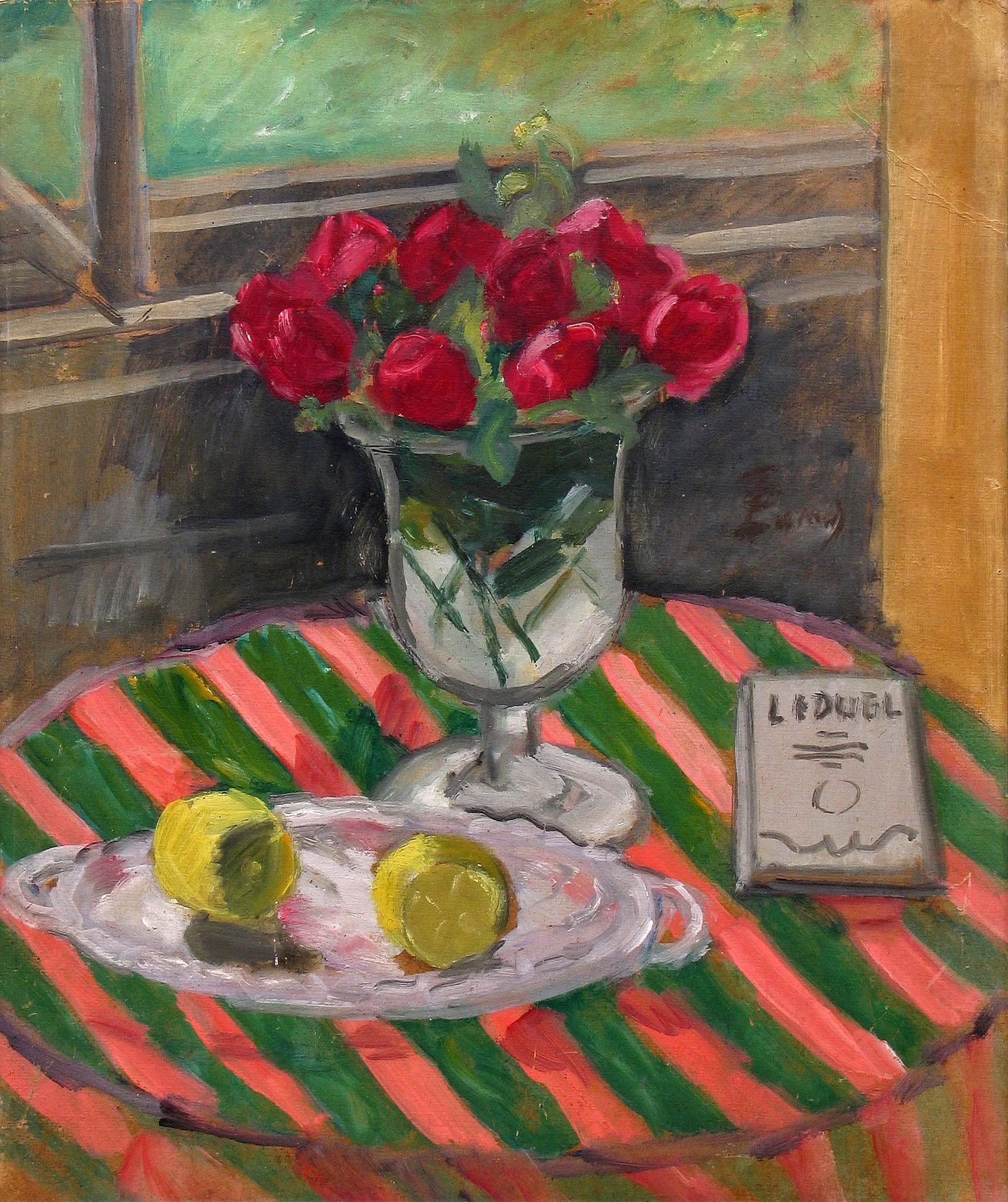
Alongside nudes and intimate settings, still life holds an essential position in Theodor Pallady's oeuvre, being one of the genres that give the artist the liberty to construct the image according to his own rhythms, correspondences, and chromatic harmonies. Familiar with the Parisian school spirit and the modern tendencies of European art, Pallady surpasses the mere faithful representation of objects, dematerializing them into their plastic essence and transforming the domestic space into one of suggestion and meditation. Pallady arrives in Paris in 1889 and, from 1892 onwards, studies in Gustave Moreau's workshop, where he meets Henri Matisse. His Parisian experience brings him into contact with the main directions of modern European art and contributes to the formation of a plastic language in which drawing, color, and surface organization become more critical than faithfully reproducing reality. The influence of post-impressionist lessons and of Cézanne can be observed in his interest for a balance between shapes and colors, as well as for how objects are arranged on the pictorial surface. This interest is also present in the works "Flowers at the window", "Vase with flowers", "Still life with white tulips" or "Still life with red flowers".
His still lifes mainly belong to his artistically mature period, between 1910-1940, where his style is fully formed, gradually assimilating post-impressionist influences and those of Cézanne, wherein his painting becomes more balanced, meditative, and focused on structure and color. In these compositions, flowers are not solely decorative motifs, but participate in the chromatic and rhythmic organization of the image. In the same period, Pallady frequently introduces books, newspapers, and domestic objects, thus creating an internal universe in which the everyday is transformed into a visual and contemplative experience.
This work is representative for the 1940s period and captures a still life built around a bunch of poppies placed in a white vase, on a table covered with a yellow tablecloth, located near a window. Alongside the flowers, there is an open art book, a yellow box, possibly a cigarette box. The objects do not seem randomly placed but make up a balanced ensemble in which each element contributes to the rhythm and atmosphere of the composition, with the flowers at the focus. The poppies bloom fresh in the vase and bring a sense of vitality, or life in a moment of contemplation, into the room. At the same time, their beauty is inseparable from their transient nature, where the poppies can be seen both as an expression of life and beauty and as a discrete suggestion of ephemerality. The contrast between white and red also introduces a chromatic and symbolic dialogue: white might suggest purity, calmness and fragility, while red brings intensity, vitality, and passion. They are not mere decorative elements but become a framework for the artist's intimate universe. In Pallady's still lifes, flowers often take on this role of intermediaries between the physical world and the inner one. Through them, the everyday acquires a poetic dimension, and seemingly banal objects are transformed into signs of personal existence. The white vase, in its simple shape and contrast to the colorful flowers, contributes to the balance of the composition. It represents the physical support of the flowers, but it can also be understood as a space that temporarily holds and supports their life. The table and yellow tablecloth provide a warm basis for the entire ensemble, where the yellow plays the role of lighting the interior and valuing the white and red of the flowers. The open art book introduces an intellectual and personal dimension. The book or album, in the universe of still lifes, is an object associated with memory, culture, and contemplation. The fact that the album is open suggests a suspended moment, as if the viewer were caught in a moment of the artist's daily life. Alongside the flowers, the album creates a dialogue between nature and culture, between the spontaneous beauty of flowers and the constructed beauty through art. This focus on everyday items is characteristic of Pallady's still lifes. Clocks, books, albums, fruits, vessels, and flowers are not merely introduced to fill the space, but are part of building a poetic interior. Each object seems to retain a trace of an experience, and together they form a universe where the everyday, intimate, and familiar attain symbolic valences. Pallady builds the composition through well-defined surfaces and a careful organization of objects, without abandoning the specific sensitivity of his painting. Through this organization, Pallady demonstrates that an apparently modest scene can become a complex space of significance. The flowers, personal objects, and decorative items are in a continuous dialogue, and the composition is built based on rhythms and correspondences that transform immediate reality into a poetic image.
For clarifications regarding the bidding procedure, hammer price costs, guarantee, payment, and collection terms for the winning lot, we recommend carefully reading/re-reading the Bidding Regulations.
For additional information regarding the lot and the auction, please contact the Art Consultants Department.
By choosing "Accept all cookies" you agree to the use of cookies to help us provide you with a better user experience and to analyse website usage. By clicking "Adjust your preferences" you can choose which cookies to allow. Only the essential cookies are necessary for the proper functioning of our website and cannot be refused
Cookie settings
Our website stores four types of cookies. At any time you can choose which cookies you accept and which you refuse. You can read more about what cookies are and what types of cookies we store in our Confidentiality Policy.
are necessary for technical reasons. Without them, this website may not function properly.
are necessary for specific functionality on the website. Without them, some features may be disabled.
allow us to analyse website use and to improve the visitor's experience.
allow us to personalise your experience and to send you relevant content and offers, on this website and other websites.