The photos of the lot are informative and indicative, and cannot provide a highly detailed view of the object from all angles. We recommend a careful physical inspection of the lot before bidding.
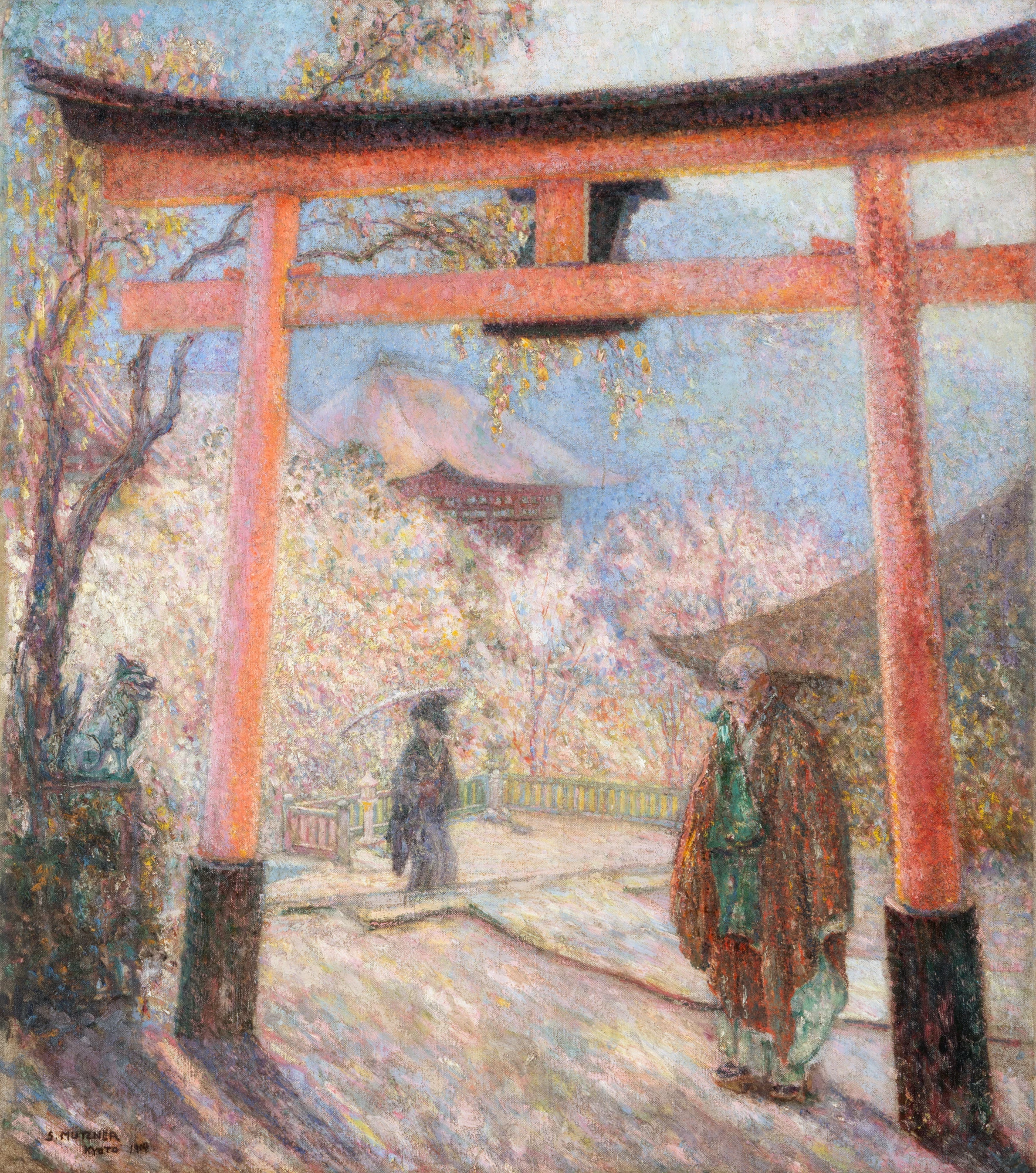
oil on canvas, 67.5 x 60 cm, signed, dated and located on the bottom left, in black, "S. Mützner, Kyoto, 1914"
Research information
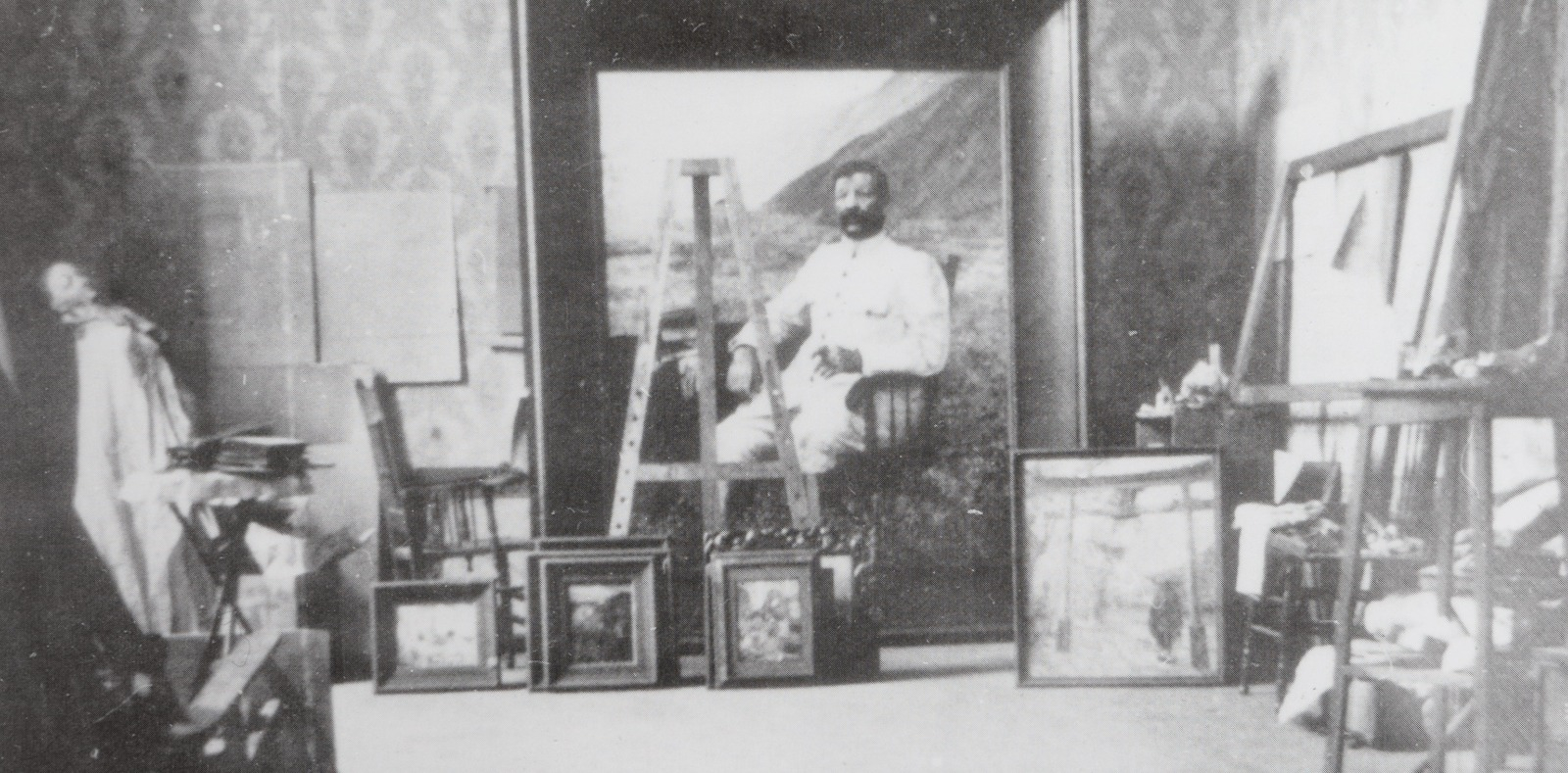
In the same year 1918, in the Venezuela Club hall, Mützner has a personal exhibition with paintings from the United States, China and Japan. Very likely the artwork also participated and is reproduced in the exhibition catalogs from 1916 and 1917 in New York.
Trained in the spirit of plein-air painting, Samuel Mützner was deeply influenced by French Impressionism, especially during the time spent in Giverny, where he came into contact with the artistic environment associated with Claude Monet. He adopted the interest in light, color, and the depiction of the moment's impression, but adapted the Western principles to his own vision. Mützner distinguished himself through his numerous travels, being one of the first Romanian artists of his generation who explored several continents. He traveled to France, Spain, Italy, Algeria, and Tunisia, and later extended his travel to Asia, America, and Oceania. His experiences in these places provided him with new themes and light effects, contributing to the diversification of his style and pictorial universe.
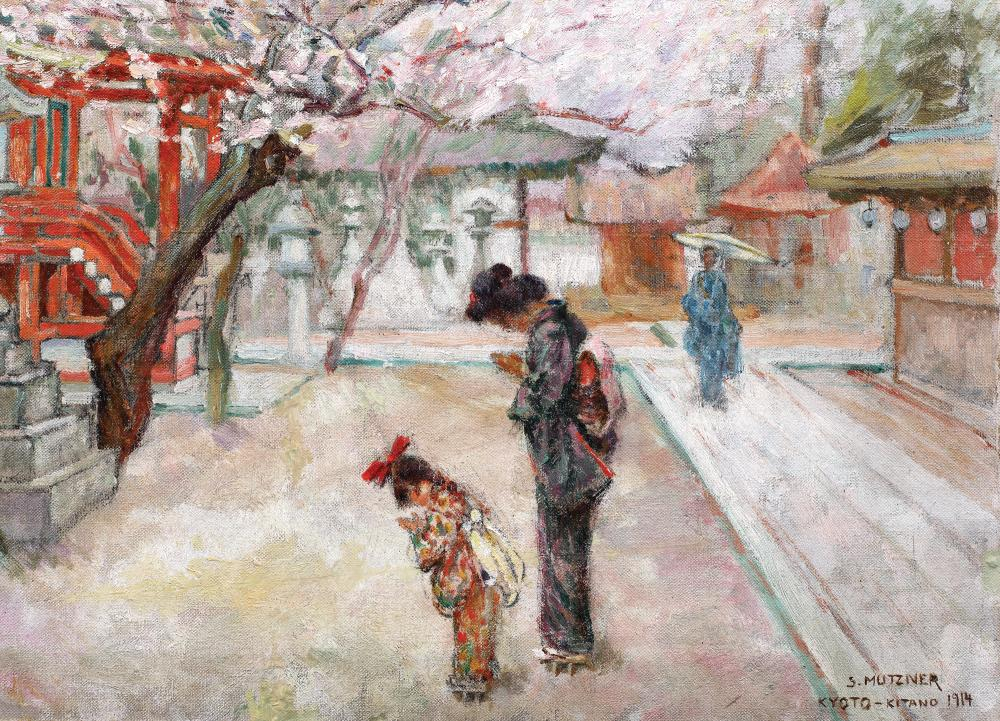
One of the most important stages of his career was the time spent in Japan, between 1912 and 1915. Mützner arrived here in the summer of 1912 and lived for almost three years, mainly in Kyoto. He was deeply impressed by the landscape, gardens, temples, and Japanese culture, as well as by the figures of geishas and courtesans. His contact with Japanese art refined his observational skills and influenced his treatment of forms and colors. Mützner adapted the divisionist technique and impressionist principles to Oriental decorative harmonies, creating landscapes with cherry blossoms, interiors, and compositions with geishas.
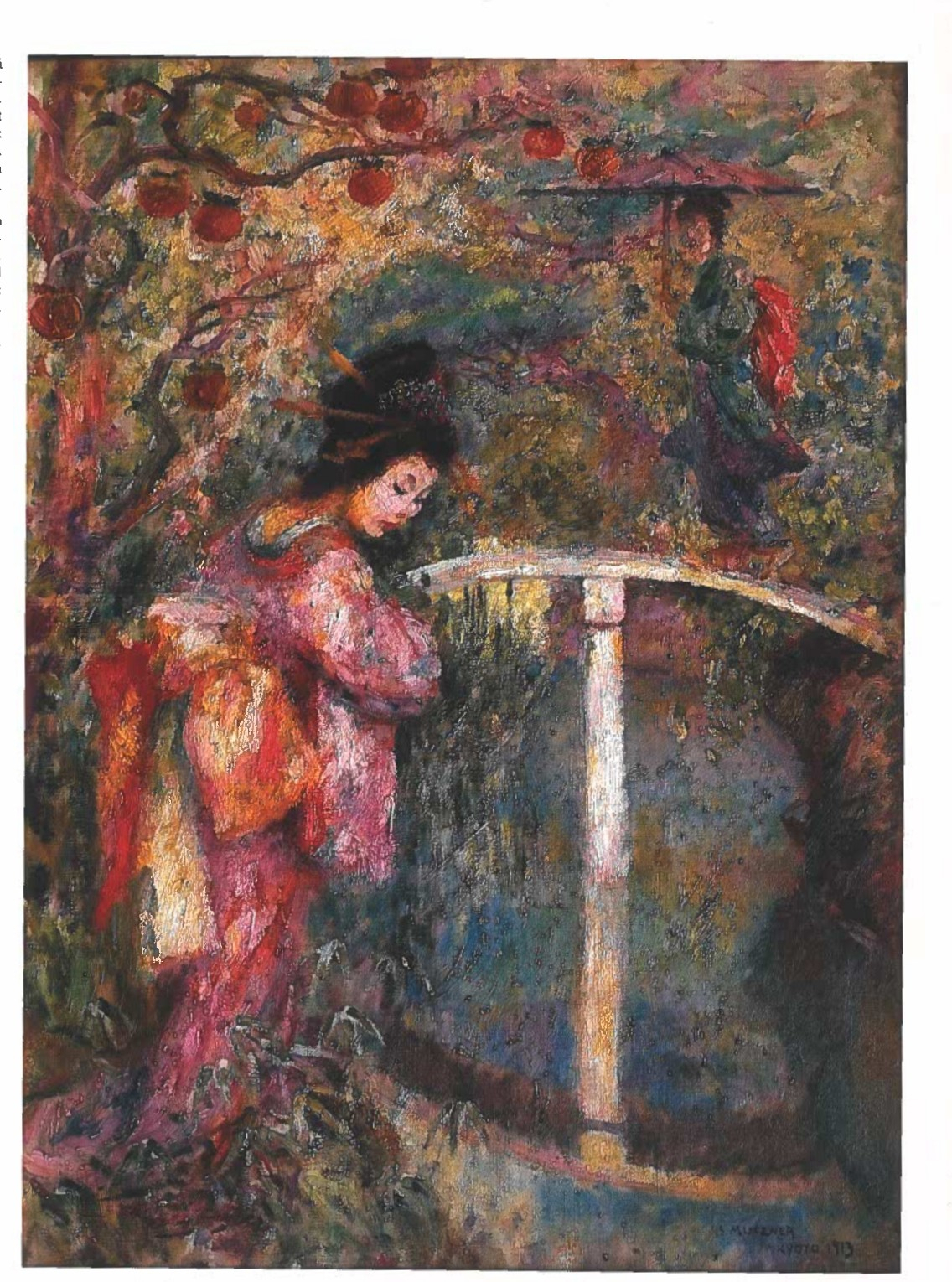
During this period, the theme of travel became closely tied to the transformation of his artistic language. Japan is not only treated as a picturesque subject but as a visual and cultural experience that enriches his manner of expression. The artist combines the sensitivity formed in France to light and color with elements inspired by Japanese aesthetics. The work dated 1914 captures two characters in an elegant and highly stylized attire, which evokes the refinement of Japanese clothing. The female character wears a fluid and ample garment, while the male character, most likely identifiable with a temple sage, is depicted in rich clothing. The gestures and attitudes of the two characters suggest tranquility and solemnity, and the outdoor setting, dominated by vegetation and ceremonial architecture, may suggest a pavilion or a temple-associated space. The composition is constructed through the relationship between characters, nature, and architecture, which create an atmosphere of contemplation, refinement, and harmony. The female character becomes an image of elegance, highlighted by vibrant tones of purple and violet. The ornamental richness of the dress is chromatically linked to the umbrella she holds in her hand, and the cherry blossoms introduce shades of pink that contrast and harmonize with the violet of the costume. Nature is not just a decorative element but contributes to the overall atmosphere of the work. Through works such as "Japanese Woman with Umbrella", "Courtesans of Shimabara", "Japanese Dancer" and "Geishas in Kyoto", Mützner integrates direct observation, impressionist light, and color with the decorative sensitivity of Oriental art. The Japanese period thus contributes to the development of a personal vision, characterized by light, color, attention to detail, elegance, and compositional balance. The Japanese experience was presented to the public at an important moment in Mützner's career, immediately after his return from travels. In January 1916, the artist organized in Bucharest the personal exhibition entitled "Le Japon", opened from January 17 to February 28, in the space on Victoriei Avenue no. 88, opposite the Kretzulescu Church. The exhibition gathered about 100 works and capitalized on his nearly three year experience in Japan, offering the public an image of the landscapes, characters, and atmosphere that the artist had discovered there. Among the exhibited works was also "Courtesans of Shimabara", made in Kyoto in 1912-1913. Shortly thereafter, the Japanese cycle was also presented in the United States, at the Ralston Galleries in New York, on Fifth Avenue, between January 28 and March 11, 1916. Thus, the American exhibition took place almost simultaneously with the one in Bucharest, indicating that the works made in Japan constituted an artistic cycle that Mützner wanted to present to both the Romanian and American public. In this sense, the Japanese period can be seen as an essential stage in the transformation of Samuel Mützner's artistic language. Travel not only provides him with new subjects, but also the possibility of combining the impressionist experience gained in France with the decorative and chromatic sensitivity encountered in Japanese art.
For clarifications regarding the bidding procedure, hammer price costs, guarantee, payment, and collection terms for the winning lot, we recommend carefully reading/re-reading the Bidding Regulations.
For additional information regarding the lot and the auction, please contact the Art Consultants Department.
By choosing "Accept all cookies" you agree to the use of cookies to help us provide you with a better user experience and to analyse website usage. By clicking "Adjust your preferences" you can choose which cookies to allow. Only the essential cookies are necessary for the proper functioning of our website and cannot be refused
Cookie settings
Our website stores four types of cookies. At any time you can choose which cookies you accept and which you refuse. You can read more about what cookies are and what types of cookies we store in our Confidentiality Policy.
are necessary for technical reasons. Without them, this website may not function properly.
are necessary for specific functionality on the website. Without them, some features may be disabled.
allow us to analyse website use and to improve the visitor's experience.
allow us to personalise your experience and to send you relevant content and offers, on this website and other websites.