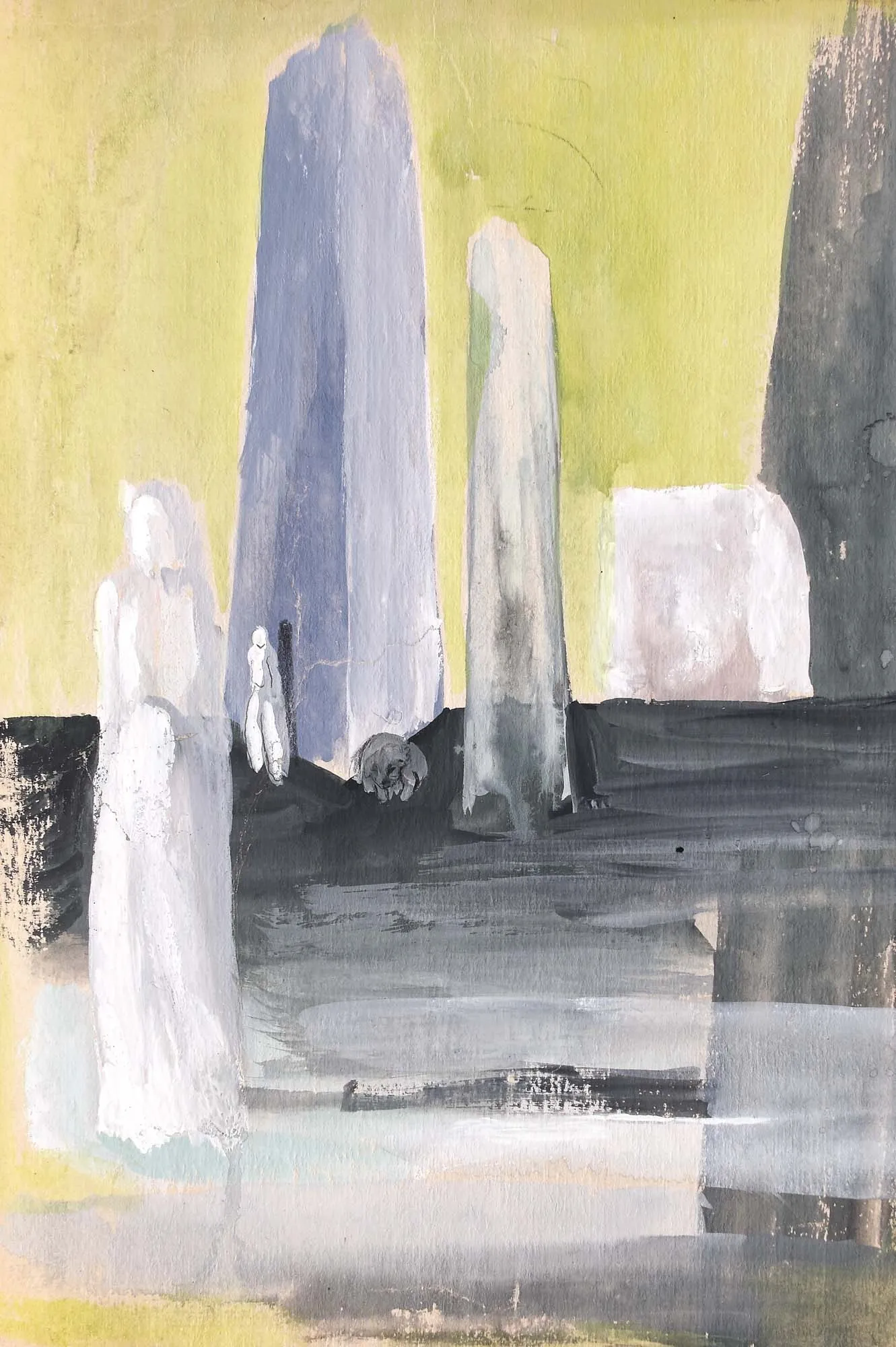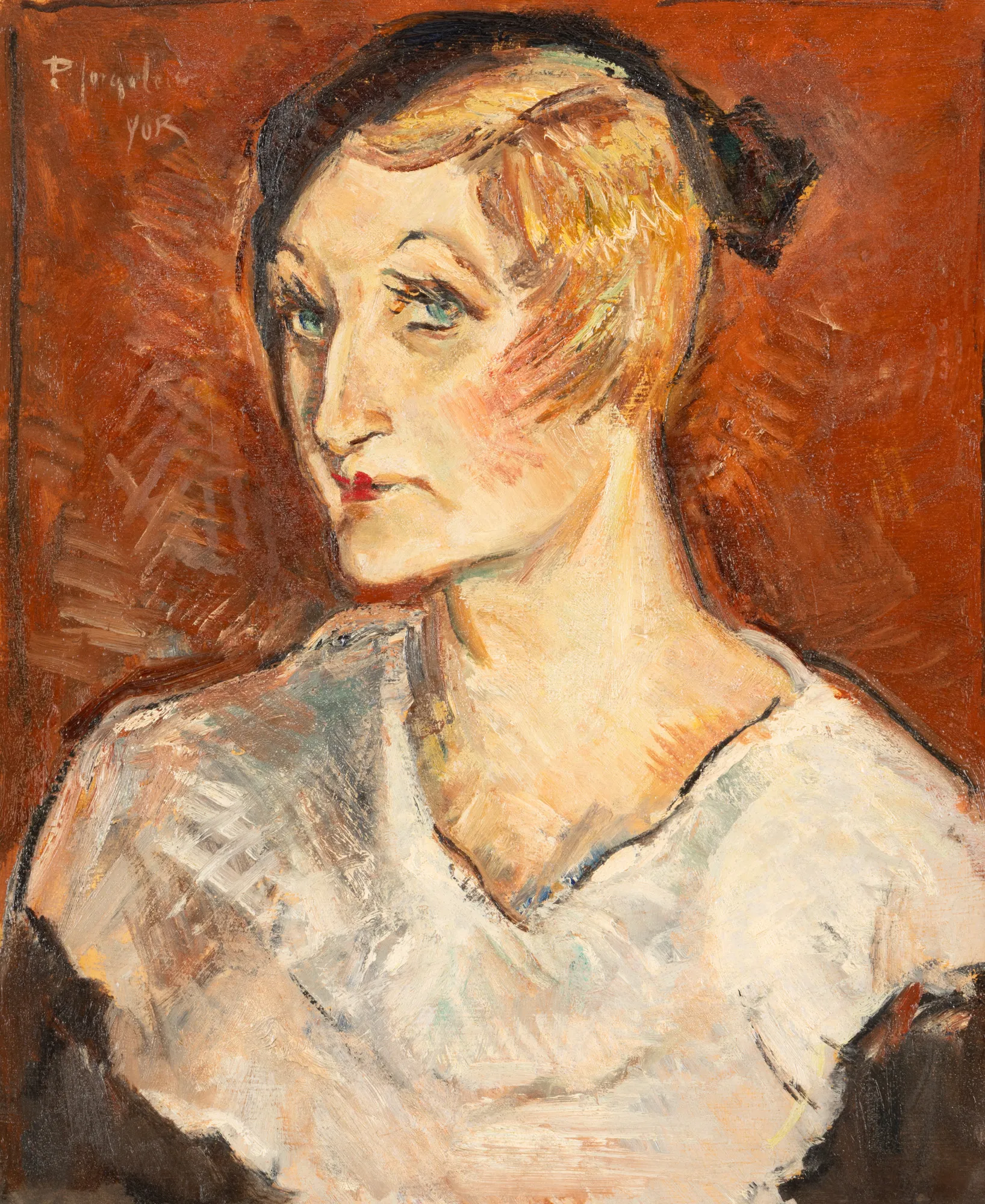

Romanian Landscape with Ruins
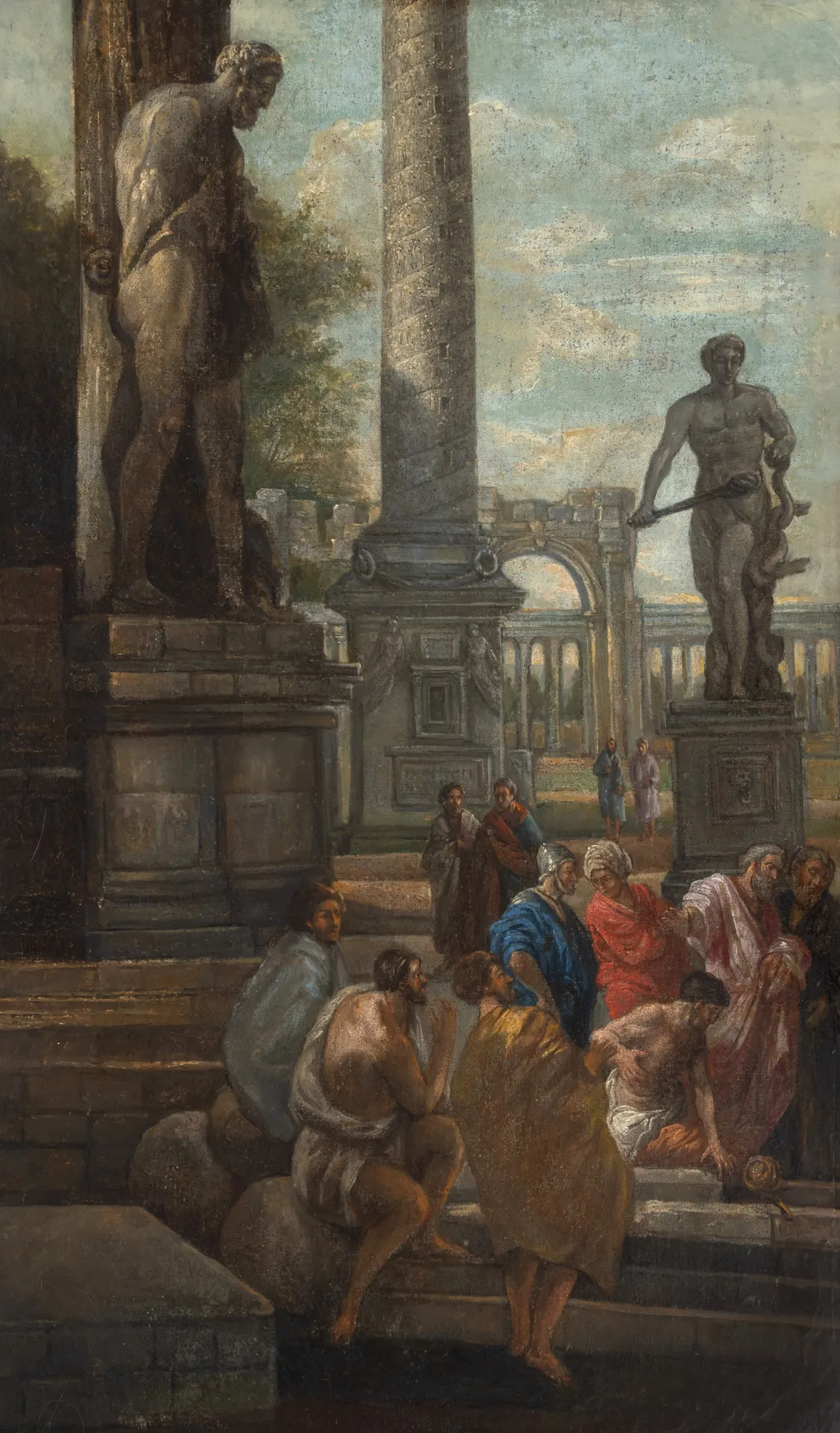
Romanian Landscape with Ruins
Opis
With studies in perspective and architectural painting, conducted in his native city Piacenza and then in Rome, the artist Panini stands out for religious themes, recordings of contemporary historical events or architectural themes. He dedicated his last years to the latter, performing pictorial studies executed in two manners, "vedute prese da i luoghi" - an accurate vision of the already actual places and a visionary manner - devised views, through which the artist demonstrated his ingenious perspective. His studies dedicated to Rome and ancient ruins often highlight important monuments and statuary groups such as the Pantheon, the Colosseum, Trajan's Column, Farnese Hercules or Laocoon, to which he added his own visions, idealized about the valuable historical space. Panini, as the first Italian artist dedicated to the architecture of Rome, was to create around him a suite of disciples and followers, both in France, where he became a professor in the 1740s, and in Italy. The school created by Panini revived the famous themes extracted from the ancient Roman forum, creating a significant series of works. It is very likely that the present work belongs to the school created by Panini in the mid-eighteenth century in Italy, carried out under the supervision of the master.
Dimenzioniranje
Širina 52.5, Visina 83
Materijal
oil on canvas
Lokacija
Artmark românia
Podrijetlo
From the 1930s to the 1950s, this piece was part of the collection of Romanian diplomat Basil Stoica (1889 - 1959), a close associate of Thomas Masaryk and Ionel I. C. Brătianu, fluent in 14 foreign languages, a champion for the formation and consecration of Greater Romania, the president in 1918 of the National League of Romanians in America, minister plenipotentiary in Bulgaria and Albania (1930-1936), the Low Countries (1937-1939), Secretary General of the Ministry of Foreign Affairs (1939-1945), negotiator in 1946 of the cause of Romania as a co-belligerent country at the Paris Peace Conference. He died in Jilava after 9 years of detention. Acquired from the diplomat's family through confiscation in 1977 by the National Museum of Art of Romania, in 2009, after the fall of the communist regime, following a long series of trials, it was returned to the heirs of the diplomat.