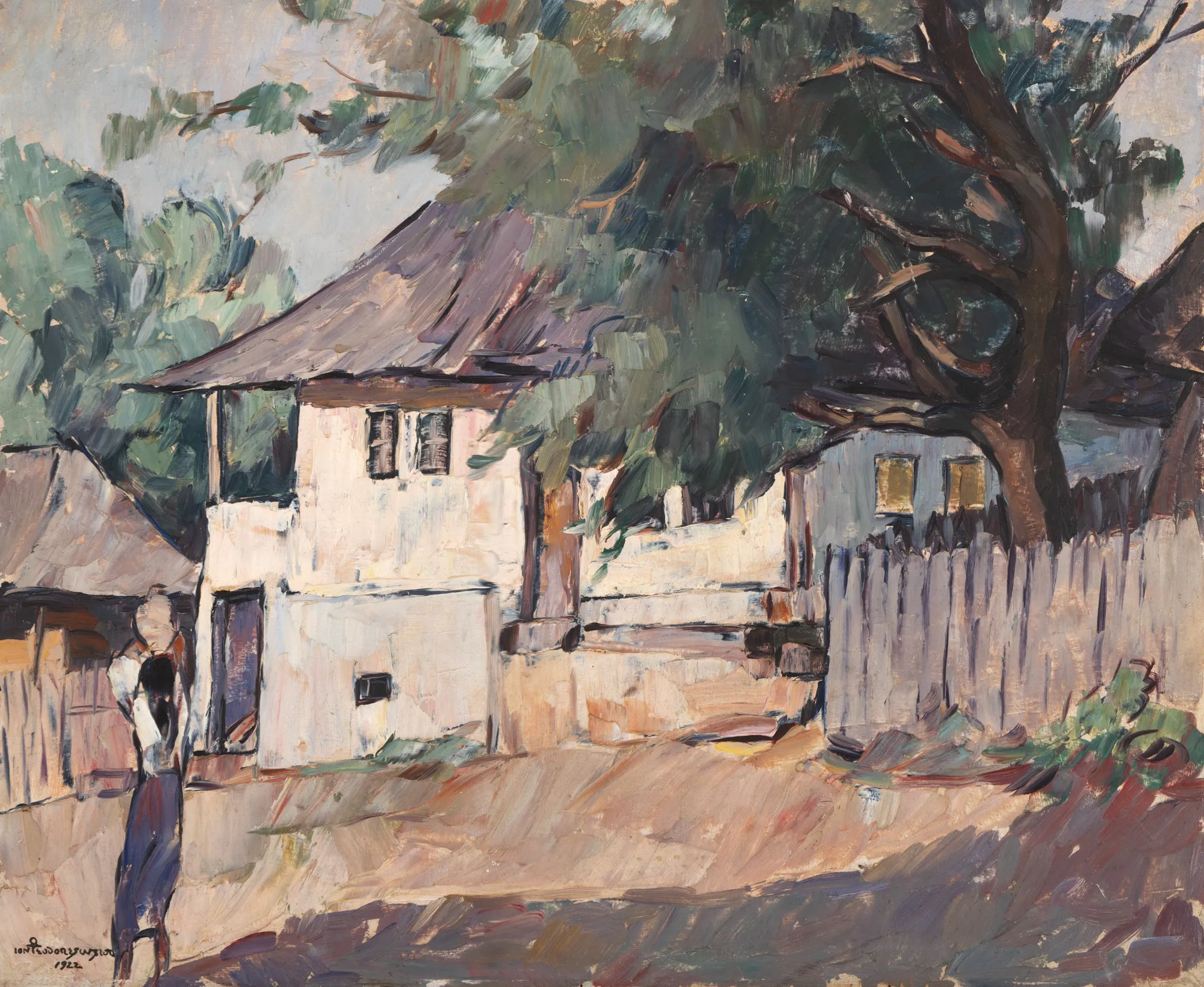

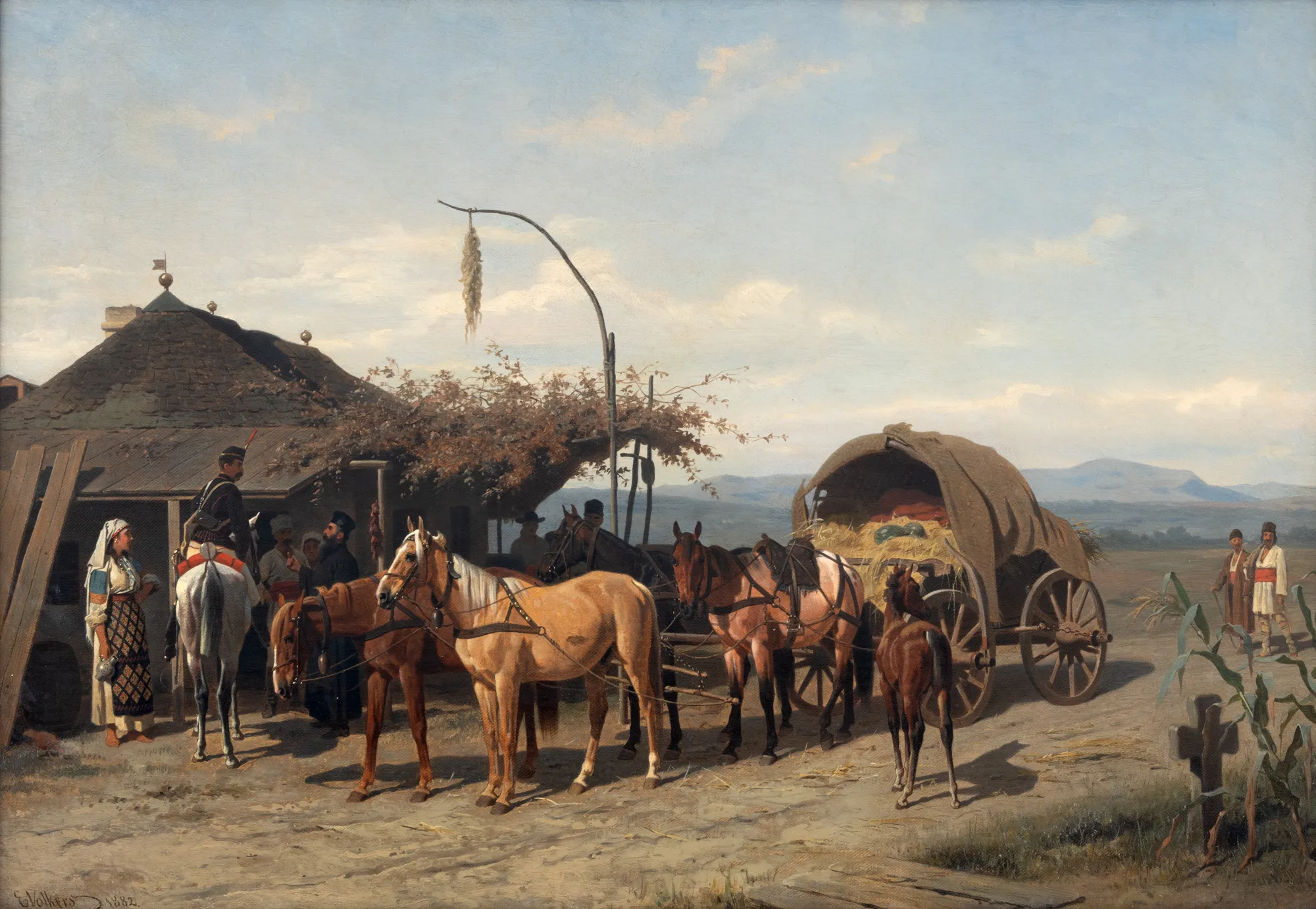
Han at Câmpulung
Fotografije lota su informativne i orijentacijske te ne mogu pružiti izuzetno detaljan prikaz predmeta iz svih kutova. Preporučujemo pažljiv fizički pregled lota prije licitiranja.
Han at Câmpulung
Opis
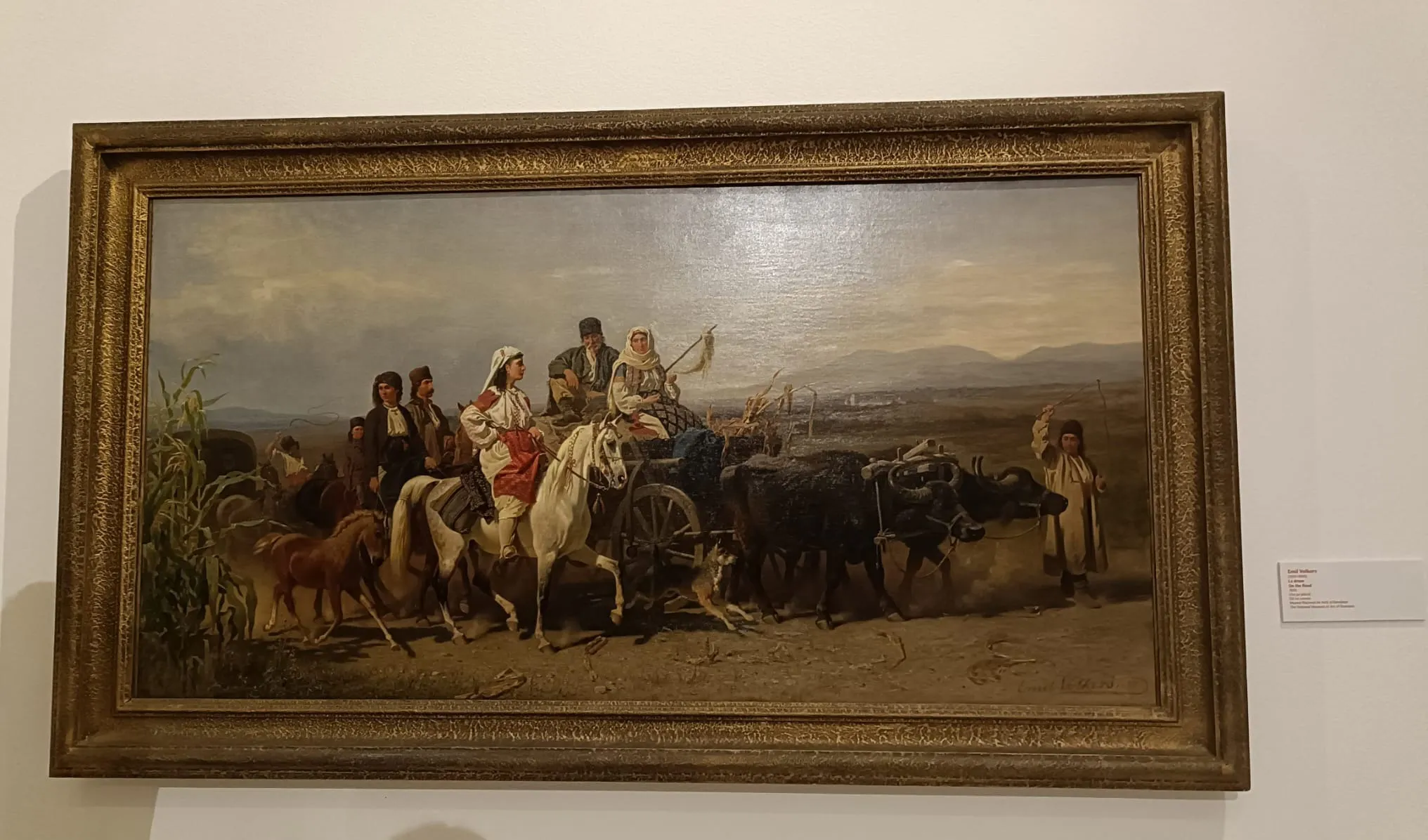
A German painter of the 19th century, whose work falls within the tradition of the Düsseldorf School of Painting, known for his equestrian painting and realistic depiction of horses. He studied in Dresden and Munich, where he came into contact with the tradition of animal painting and the work of Albrecht and Franz Adam, known for their equestrian and battle scenes. His passion for horses developed from childhood, when he had the opportunity to observe closely the horses and activity around the stables. Direct observation subsequently became one of the essential characteristics of his art. Volkers' style is characterized by realism, precision, attentiveness to anatomy, detail, posture, and movement. His horses are portrayed with exceptional accuracy, but the artist's interest is not limited only to the animal, he also examines its relationship with the human and the environment in which it lives. A significant moment was his trip to Romania in 1867, made at the invitation of Carol I, which prompted an expansion of his artistic repertoire. In addition to equestrian portraits, Volkers began to increasingly represent peasants, riders, carts, traditional costumes, tents, animals, and rural landscapes. Similar examples of his work include "On the Road", "At the Fountain", "Nomads", and "Rest in the Field" which can be found in the National Museum of Art of Romania, and museums in Germany and Austria. The artwork falls within his new preoccupation with rural scenes and everyday life. The composition captures a moment of rest, where people, animals, and nature form a single visual universe. At the center of the scene is a cart pulled by several horses, an element that attracts attention and organizes the entire composition. Through this interpretation, Volkers not only aims to depict a group of characters, but constructs the image of a community in motion and at rest. The horses and cart suggest movement and voyage, while the stopover introduces the idea of rest and daily life. The importance of the work lies in the relationship between man, horse, object, and landscape. Horses no longer appear in isolation, as in the equestrian portraits commissioned by the aristocracy, but are integrated into a social and natural context. They become an essential part of daily existence, life along with carts, characters and shelters. Thus, the work is not just a scenic scene, but becomes an image of rural life in 19th century Romania. Volkers transforms his direct observation of rural life into a composition in which movement, rest and the relationship between humans and animals become the main narrative elements as well as a realistic and picturesque image of South-East Europe in the 19th century.
Biografija
GOHL,W., "Horse Portraiture and Blazing Saddles-Research-Report on the Artist Emil Volkers (1831-1905)", Brukenthal. Acta Musei, IX. 2, Brukenthal National Museum Publishing, Sibiu, 2014, pp 299-307.
Dimenzioniranje
Širina 90.5, Visina 60.5
Potpis
signed and dated lower left, in black, "E. Volkers, 1882"
Datiranje
1882
Materijal
oil on canvas
Lokacija
Artmark românia